AI in Clinical Data Statistics (CDISC, SAS, R, Python): Future of Jobs, Automation, and Skills to Stay Relevant
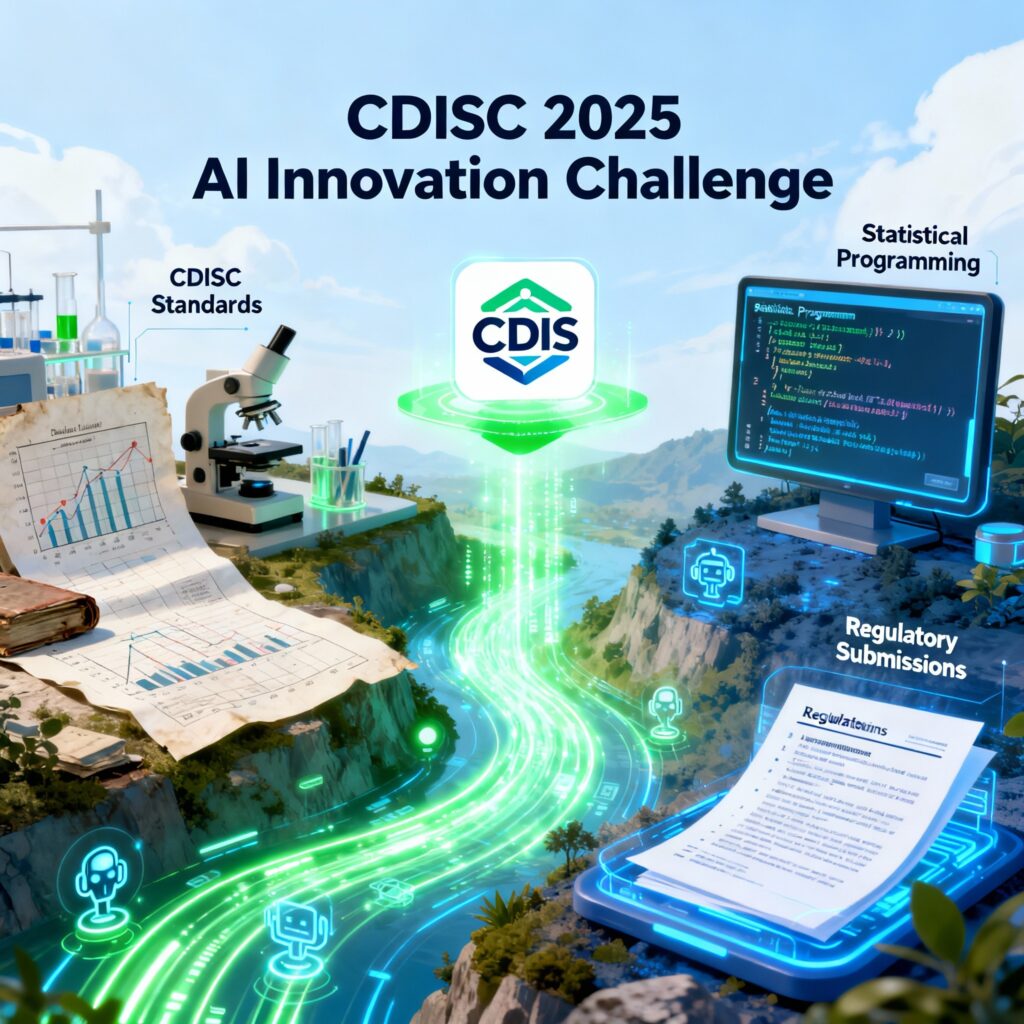
The landscape of clinical data statistics is experiencing unprecedented transformation as Artificial Intelligence (AI) revolutionizes how we approach CDISC standards, statistical programming, and regulatory submissions. CDISC’s 2025 AI Innovation Challenge represents a global call to vendors, researchers, and innovators to create AI/ML-driven solutions that advance the digitization and automation of clinical research using CDISC Standards, signaling a fundamental shift in our industry.
As we navigate this AI-driven transformation, clinical research professionals face a critical question: How can we adapt our skills to remain relevant while AI reshapes traditional roles in Clinical Data Management, Biostatistics, Statistical Programming, and beyond?
The Current State of AI in Clinical Research: Real Numbers, Real Impact
Automation Success Stories in CDISC Implementation
The numbers speak volumes about AI’s current impact on clinical data statistics. Leading organizations have achieved 95% automation in SDTM generation across 70+ domains and 80% in ADaM variable creation, allowing for quick, repeatable, and scalable data transformation. More striking yet, these implementations have reduced statistical programming efforts by over 65% and saved 8,100 business hours in the first year alone.
This isn’t theoretical future planning—it’s happening now. Companies implementing AI-driven CDISC automation are seeing immediate returns on investment while maintaining regulatory compliance standards.
FDA’s Evolving Regulatory Framework for AI
The regulatory landscape is evolving rapidly to accommodate AI innovations. FDA published a draft guidance in 2025 titled, “Considerations for the Use of Artificial Intelligence to Support Regulatory Decision Making for Drug and Biological Products”, providing clear recommendations for industry professionals on AI implementation in regulatory submissions.
On January 6, 2025, the FDA published the Draft Guidance: Artificial Intelligence-Enabled Device Software Functions: Lifecycle Management and Marketing Submission Recommendations, further solidifying the regulatory framework for AI applications in clinical research.
Department-by-Department Analysis: Where AI is Reshaping Clinical Research Jobs
Clinical Data Management: From Manual to Intelligent
Current Impact:
- Automated data cleaning and query generation
- AI-powered source data verification
- Intelligent discrepancy detection and resolution
- Predictive analytics for data collection planning
Jobs at Risk (5-10 years):
- Entry-level data entry positions
- Manual data review roles
- Basic data cleaning specialists
- Routine query generation tasks
Evolving Roles:
- Data Management professionals are becoming AI orchestrators, focusing on exception handling and complex decision-making rather than routine data processing.
Biostatistics: Enhanced Analytics, Not Replacement
Current Transformation:
- Automated statistical plan generation
- AI-powered sample size calculations
- Intelligent interim analysis recommendations
- Predictive modeling for study outcomes
Future Outlook: Biostatisticians are experiencing role enhancement rather than replacement. The focus shifts from calculating statistics to interpreting AI-generated insights and making strategic decisions about study design and analysis approaches.
Statistical Programming: The Great Evolution
AI tools are transforming the role of SAS programmers, making them faster and more effective, but human expertise remains crucial in directing AI and ensuring high-quality outcomes. The future of programming likely lies in a hybrid approach that leverages both human expertise and AI-driven capabilities.
Key Changes in Statistical Programming:
- Automated Code Generation: AI can now generate SAS, R, and Python code for standard CDISC deliverables
- Quality Control Enhancement: Machine learning algorithms detect programming errors and inconsistencies faster than manual review
- Cross-Platform Translation: AI tools can convert SAS code to R or Python, and vice versa
Skills Evolution Required:
- From writing basic macros to designing AI-assisted programming workflows
- From manual testing to AI-powered validation frameworks
- From single-language expertise to multi-platform AI orchestration
Pharmacovigilance: AI-Powered Safety Monitoring
Current Applications:
- Automated adverse event coding using MedDRA
- Signal detection through machine learning algorithms
- Natural language processing for case narrative analysis
- Predictive modeling for safety risk assessment
Future Roles: Safety professionals will focus on AI model validation, complex case adjudication, and strategic safety decision-making rather than routine data processing.
Medical Writing: Intelligent Documentation
AI Integration:
- Automated regulatory document generation
- AI-assisted clinical study report writing
- Intelligent literature reviews and meta-analyses
- Real-time protocol deviation reporting
Regulatory Affairs: Streamlined Submissions
Current Innovations:
- AI-powered submission document compilation
- Automated regulatory requirement mapping
- Intelligent query response generation
- Predictive analytics for approval timelines
The Python vs. SAS vs. R Landscape in 2025
FDA Acceptance of Modern Programming Languages
The regulatory acceptance of programming languages has expanded significantly. R use at the FDA is completely acceptable and has not caused any problems, and R and Shiny are being used to help the FDA quickly and accurately assess the efficacy of new medical products.
Current Market Reality:
| Language | Regulatory Acceptance | AI/ML Capabilities | Industry Adoption | Future Outlook |
| SAS | Established Gold Standard | Limited Native AI | High in Pharma | Stable but Evolving |
| R | Fully Accepted | Excellent | Growing Rapidly | Strong Growth |
| Python | Increasingly Accepted | Superior | Emerging in Clinical | High Growth Potential |
Why SAS Alone Isn’t Enough Anymore
While SAS remains the gold standard for regulatory submissions, the limitations become apparent in an AI-driven world:
- Limited AI/ML Native Capabilities: SAS requires additional modules for advanced machine learning
- Cost Considerations: Expensive licensing limits scalability
- Talent Pool: Younger professionals increasingly prefer open-source alternatives
- Innovation Speed: Open-source communities develop AI tools faster than proprietary platforms
Future Job Market Analysis: 5-10 Year Outlook
Jobs at Highest Risk of Automation
AI could eliminate half of entry-level white-collar jobs within the next five years, with job losses affecting the global workforce sooner than previous waves of technological change.
High-Risk Positions (70-90% automation potential):
- Entry-level data entry clerks
- Basic SDTM/ADaM programmers following standard templates
- Manual data reviewers
- Routine report generators
- Basic statistical computing support
Jobs Experiencing Transformation (50-70% task automation)
Evolving Roles:
- Senior Statistical Programmers → AI Programming Orchestrators
- Data Managers → AI Data Strategy Specialists
- Biostatisticians → AI-Enhanced Analytics Directors
- Clinical Data Scientists → AI/ML Clinical Researchers
New Jobs AI is Creating
Emerging Roles:
- AI Clinical Data Engineers: Specialists in AI/ML pipeline development for clinical research
- CDISC AI Automation Specialists: Experts in AI-powered CDISC standard implementation
- Clinical AI Validation Specialists: Professionals ensuring AI model reliability in regulatory environments
- AI Regulatory Affairs Consultants: Specialists navigating AI-related regulatory submissions
The Optimistic Outlook
PwC’s 2025 Global AI Jobs Barometer reveals that AI can make people more valuable, not less – even in the most highly automatable jobs. The key lies in continuous skill development and strategic career positioning.
Why Basic Automation Isn’t Enough: The AI Skills Gap
Beyond SAS Macros: The Intelligence Difference
Traditional automation through SAS macros or basic programming scripts represents yesterday’s solution to tomorrow’s challenges. Here’s why AI skills are essential:
Limitations of Traditional Automation:
- Static rule-based processing
- Manual maintenance and updates required
- Limited adaptability to new scenarios
- No learning or improvement capabilities
- Reactive rather than predictive
AI-Powered Advantages:
- Dynamic learning from data patterns
- Self-improving algorithms
- Predictive capabilities
- Adaptive to new data structures
- Proactive issue identification
SAS Forecasts: AI Reality Over Hype for Healthcare in 2025
Applying generative AI to clinical trials will lead to inclusion of underserved populations, faster submissions, and overall acceleration of new clinical trial models and approaches, according to SAS leadership predictions for 2025.
Essential AI Skills for Clinical Data Statistics Professionals
Core Technical Skills
1. Machine Learning Fundamentals
- Supervised and unsupervised learning algorithms
- Model validation and cross-validation techniques
- Feature engineering and selection
- Bias detection and mitigation
2. Programming Languages for AI
- Python: TensorFlow, PyTorch, scikit-learn, pandas
- R: caret, randomForest, e1071, tidyverse for AI workflows
- SAS: Integration with SAS Viya for AI/ML capabilities
3. Natural Language Processing (NLP)
- Text mining for adverse event narratives
- Automated MedDRA coding
- Protocol and regulatory document analysis
- Clinical note processing
4. Cloud Computing Platforms
- AWS SageMaker for clinical ML
- Azure Machine Learning
- Google Cloud AI Platform
- Understanding of GxP compliance in cloud environments
CDISC-Specific AI Skills
1. CDISC Automation Tools
- AI-powered SDTM mapping
- Automated ADaM dataset creation
- Define.xml generation using AI
- Analysis Results Standard (ARS) implementation for automation, consistency, traceability, and reuse of results data
2. Regulatory AI Applications
- AI model validation for regulatory submissions
- Automated regulatory document generation
- AI-powered safety signal detection
- Predictive modeling for regulatory approval timelines
Data Science and Analytics
1. Advanced Statistical Modeling
- Bayesian methods for clinical trials
- Time-series analysis for longitudinal data
- Causal inference techniques
- Survival analysis with ML enhancements
2. Big Data Technologies
- Hadoop and Spark for large clinical datasets
- Real-world evidence (RWE) analytics
- Electronic health record (EHR) data processing
- Integration of multi-source clinical data
Recommended Learning Path for Clinical Research Professionals
For Entry-Level Professionals
Phase 1 (Months 1-6): Foundation Building
- Master R or Python basics
- Understand CDISC standards thoroughly
- Learn basic machine learning concepts
- Complete introductory AI/ML courses
Phase 2 (Months 7-12): Specialization
- Advanced statistical programming in chosen language
- Clinical-specific ML applications
- Cloud platform basics (AWS/Azure)
- AI ethics and bias in healthcare
Phase 3 (Months 13-18): Advanced Applications
- NLP for clinical text analysis
- AI model deployment and validation
- Regulatory compliance for AI applications
- Real-world project implementation
For Experienced Professionals
Immediate Actions (Next 3 months):
- Assess current skill gaps in AI/ML
- Choose primary AI programming language (Python recommended)
- Begin cloud platform training
- Join AI in clinical research communities
Medium-term Goals (3-12 months):
- Complete advanced AI/ML certification
- Implement AI pilot project at work
- Develop expertise in clinical-specific AI tools
- Build portfolio of AI-enhanced deliverables
Long-term Strategy (1-2 years):
- Become organizational AI champion
- Lead AI implementation initiatives
- Mentor others in AI adoption
- Contribute to industry AI standards
Industry Certifications and Training Programs
Professional Certifications Worth Pursuing
AI/ML Certifications:
- AWS Certified Machine Learning – Specialty
- Google Cloud Professional Machine Learning Engineer
- Microsoft Azure AI Engineer Associate
- SAS Certified AI & Machine Learning Professional
Clinical Research AI Specializations:
- CDISC AI Innovation Challenge participation
- FDA AI/ML Training Programs
- Clinical Data Interchange Standards Consortium (CDISC) AI courses
- Pharmaceutical AI/ML specializations from major universities
The Certification Advantage
In 2025, certified professionals earn 15–25% higher salaries than their non-certified peers, especially in roles like Clinical Research Associate, Trial Manager, and Statistical Programmer. This premium is even higher for AI-specialized certifications.
Practical Implementation Strategies
Building AI Skills While Working
1. Start with Existing Projects
- Identify repetitive tasks in current role
- Research AI solutions for these specific problems
- Propose pilot implementations to management
- Document and share success stories
2. Cross-functional Collaboration
- Partner with IT departments on AI initiatives
- Collaborate with biostatisticians on ML models
- Work with data scientists on clinical applications
- Participate in cross-departmental AI working groups
3. Internal Training and Knowledge Sharing
- Organize lunch-and-learn sessions on AI
- Create internal documentation for AI tools
- Mentor colleagues in AI adoption
- Establish communities of practice
Overcoming Common Implementation Challenges
Challenge 1: Regulatory Uncertainty
- Solution: Stay updated with FDA AI guidance documents
- Participate in industry working groups
- Engage with regulatory consultants specializing in AI
Challenge 2: Data Quality and Standardization
- Solution: Implement robust data governance frameworks
- Invest in data quality tools and processes
- Establish clear data standardization protocols
Challenge 3: Organizational Resistance
- Solution: Start with small, low-risk pilot projects
- Demonstrate clear ROI and compliance benefits
- Provide extensive change management support
The Global Perspective: AI Adoption Across Regions
Regional Variations in AI Adoption
North America:
- Leading in regulatory AI acceptance
- Strong investment in AI infrastructure
- Advanced clinical research AI applications
Europe:
- GDPR considerations shape AI implementations
- Strong emphasis on ethical AI development
- Growing regulatory acceptance through EMA initiatives
Asia-Pacific:
- Rapid adoption in countries like Japan and Singapore
- Significant government investment in healthcare AI
- Emerging regulatory frameworks
Emerging Markets:
- Cost-effective AI solutions gaining traction
- Mobile-first AI applications in clinical research
- Growing participation in global AI initiatives
Conclusion: Embracing the AI-Powered Future
The transformation of clinical data statistics through AI is not a distant future—it’s happening now. CDISC’s 2025 AI Innovation Challenge and the 95% automation achievements in SDTM generation demonstrate that AI is already delivering tangible results in our industry.
The question isn’t whether AI will impact clinical research—it’s how quickly we can adapt and position ourselves to thrive in this new landscape. Professionals who embrace AI skills today will not only survive but lead the next generation of clinical research innovation.
AI can make people more valuable, not less, but only if we commit to continuous learning and skill development. The future belongs to clinical research professionals who can seamlessly blend domain expertise with AI capabilities, creating solutions that were impossible just a few years ago.
Frequently Asked Questions
Will AI completely replace SAS programmers in clinical research?
No, AI will not completely replace SAS programmers. Human expertise remains crucial in directing AI and ensuring high-quality outcomes. The role is evolving from writing code to orchestrating AI-powered programming workflows.
Is it too late to start learning AI skills in clinical research?
It’s never too late. Certified professionals earn 15–25% higher salaries than their non-certified peers, and the demand for AI-skilled professionals continues to grow. Start with foundational skills and build gradually.
How long does it take to become proficient in clinical research AI?
For professionals with existing clinical research experience, achieving basic proficiency takes 6-12 months of dedicated learning. Advanced proficiency requires 1-2 years of consistent practice and application.
Which programming language should I learn first for clinical research AI?
Python is increasingly recommended due to its superior AI/ML libraries and growing regulatory acceptance. However, R remains excellent for statistical applications and is fully FDA-accepted. Choose based on your career goals and organizational needs.
How can I convince my organization to invest in AI training?
Start with small pilot projects demonstrating clear ROI. Organizations are seeing 65% reductions in statistical programming efforts and thousands of business hours saved. Present these success stories and propose gradual implementation.
Ready to future-proof your career in clinical research? The AI revolution in clinical data statistics is creating unprecedented opportunities for professionals who invest in the right skills. Don’t wait for change to happen—lead it.
 Accelerate Your AI Journey: Explore comprehensive training programs that combine clinical research expertise with cutting-edge AI skills at iicrs.com/course/artificial-intelligence-in-clinical-research/ and position yourself at the forefront of the industry transformation.
https://iicrs.com/blog/ai-in-clinical-data-statistics-future-jobs-automation-skills/


Comments
Post a Comment